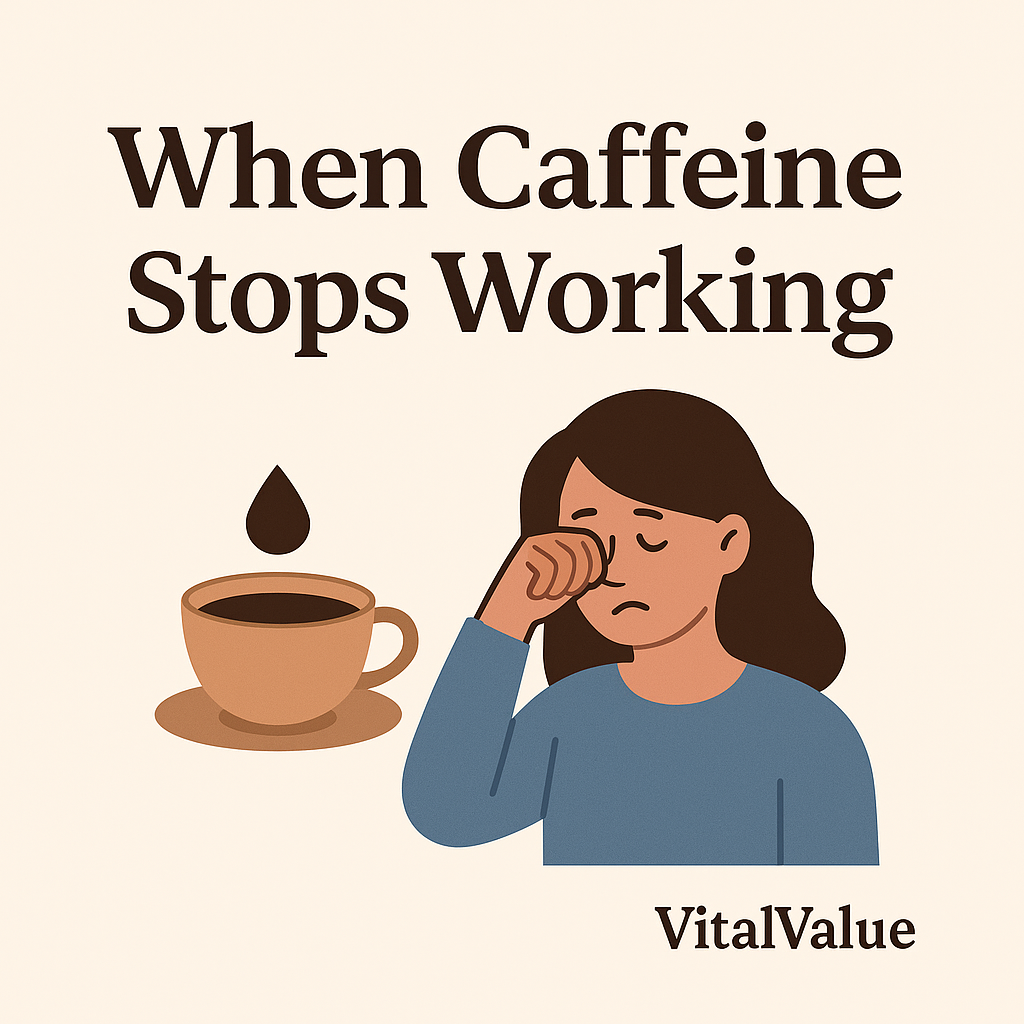
When the cup loses its magic, it’s not failure—it’s a whisper from the body.
Slow down, breathe, and let real energy find its way back again.
You pour your morning coffee, waiting for that familiar spark — the focus, the lift, the quiet clarity.
But lately, nothing happens.
No surge of alertness, no warmth behind your eyes, just the same dull tiredness.
It’s frustrating, but it’s also a sign of something important: your body is pushing back.
Caffeine hasn’t stopped working — your system is simply asking for rest, not more stimulation.
✨ If coffee no longer helps you stay alert,
wake circulation with [10-Minute Morning Stretch Routine for Busy People].
💭 How Caffeine Works — and Why It Once Felt So Powerful
Caffeine doesn’t give you energy; it borrows it.
It blocks a chemical called adenosine, which builds up naturally during the day and signals to your brain that it’s time to rest.
When caffeine steps in, adenosine can’t do its job, so you feel awake — even when your body is tired.
At first, this feels incredible.
You get sharper mornings, longer focus, and that comforting ritual of “productivity in a cup.”
But your body is smart.
Over time, it adapts by making more adenosine receptors — meaning you now need more caffeine to block the same level of fatigue.
That’s how tolerance forms, and it’s your body’s quiet way of saying: “I’m not fooled anymore.”
⚙️ The Signs Your Body Is Resisting Caffeine
1️⃣ You feel tired even after coffee.
The buzz fades faster, or never comes at all.
2️⃣ You need increasing amounts.
One cup turns into three, then four — and still, no real alertness.
3️⃣ Your sleep quality drops.
Even when you go to bed on time, you wake up groggy because caffeine lingers in your system for hours.
4️⃣ You experience irritability or anxiety.
Instead of clarity, you get jittery thoughts or heart palpitations — signs that your nervous system is overstimulated.
5️⃣ You rely on caffeine to feel “normal.”
If you can’t start your day, focus, or even socialize without it, your body is no longer responding to caffeine — it’s dependent on it.
✨ Overuse dulls your natural rhythm —
pair this with [Why You Feel Tired Even After 7 Hours of Sleep].
🩺 Why Your Body Pushes Back
When caffeine use becomes daily and prolonged, your body shifts from stimulation to defense.
Your adrenal glands, which help manage stress hormones like cortisol, begin to tire.
The nervous system stays in a constant “on” mode, leaving little room for recovery.
The result?
Your body downregulates sensitivity to caffeine because it’s trying to protect you.
In essence, caffeine loses its power not because it’s weak — but because your body is exhausted.
It no longer has the reserves to respond.
Think of it like a car running on empty: pressing harder on the gas doesn’t make it go faster — it just burns what’s left more quickly.
🌿 How to Reset Your Natural Energy
✅ 1. Take a caffeine break.
Start with 3–5 days of gradual reduction instead of quitting overnight.
Replace one cup with herbal tea, warm lemon water, or decaf coffee.
This allows adenosine receptors to normalize and your natural energy rhythms to recover.
✅ 2. Prioritize real rest.
When caffeine stops working, it’s usually because you’re deeply sleep-deprived.
Commit to a week of consistent, earlier bedtimes and a cool, dark sleeping space.
Your brain repairs itself during deep sleep — the same state caffeine has been delaying.
✅ 3. Eat for steady energy.
Low blood sugar mimics fatigue and makes caffeine cravings worse.
Include whole grains, protein, and healthy fats at breakfast to stabilize focus naturally.
✅ 4. Hydrate regularly.
Caffeine is mildly diuretic; dehydration intensifies tiredness and headaches.
Start your day with a glass of water before coffee to reduce strain on your system.
✅ 5. Move your body gently.
Light stretching, walking, or morning sun exposure boosts dopamine and serotonin — the same “feel-good” chemicals coffee tries to imitate.
✅ 6. Find a new ritual.
If coffee represents comfort, replace it with something that feels equally grounding — a warm mug of tea, mindful breathing, or music as you start the day.
You’re not losing a habit; you’re upgrading it.
💫 What Happens When You Reset
Within a week of cutting back, your energy may dip — that’s normal.
But after 10–14 days, adenosine receptors begin to recalibrate.
You’ll start waking up with clearer focus, more natural alertness, and fewer crashes in the afternoon.
When you reintroduce caffeine later, one small cup will feel like it used to — sharp, gentle, and effective.
That’s your body saying, “Thank you for listening.”
🌸 Emotional Awareness: Caffeine and Control
For many people, caffeine isn’t just about staying awake — it’s about staying in control.
It helps mask fatigue, sadness, or overwhelm that feel too heavy to face.
But when the body stops responding, it’s not a failure.
It’s an invitation to rest — to let your energy rebuild instead of forcing it.
Learning to function without constant stimulation isn’t weakness; it’s recovery.
The quiet focus that returns afterward is different — steadier, kinder, more sustainable.
✨ A Small Reminder
Caffeine is a tool, not a crutch.
When it stops working, don’t push harder — pause.
Your body isn’t betraying you; it’s protecting you from burnout.
So tomorrow morning, before you reach for another cup, take a breath.
Ask yourself what your body really wants: more coffee, or more care?
That answer will tell you everything about the energy you’ve been missing.
Choose a gentler evening wind-down with
'Wellness' 카테고리의 다른 글
| Summer Foot Care Tips | Prevent Athlete’s Foot, Sweat, and Odor (0) | 2025.08.19 |
|---|---|
| How to Sleep Comfortably on Hot and Humid Nights (0) | 2025.08.19 |
| How to Reset Your Sleep Schedule After a Holiday (0) | 2025.08.18 |
| Why Anger Causes Stomach Pain and What Your Body Is Signaling (0) | 2025.08.17 |
| Why Emotional Overload Happens and the Body Signals You Should Watch (0) | 2025.08.16 |


