Your eyes and brain are deeply connected. Discover how vision health impacts memory, focus, and cognition, plus daily habits to protect both.
The eyes are often called the “windows to the soul,” but they are also windows to the brain. In fact, the retina is made of neural tissue and directly connects to the brain via the optic nerve. Every image, color, and movement you see is translated into brain signals within milliseconds.
Because of this close connection, problems in eye health can sometimes reflect or even influence brain function. Supporting your vision means more than protecting sight—it can also strengthen memory, focus, and cognitive resilience.
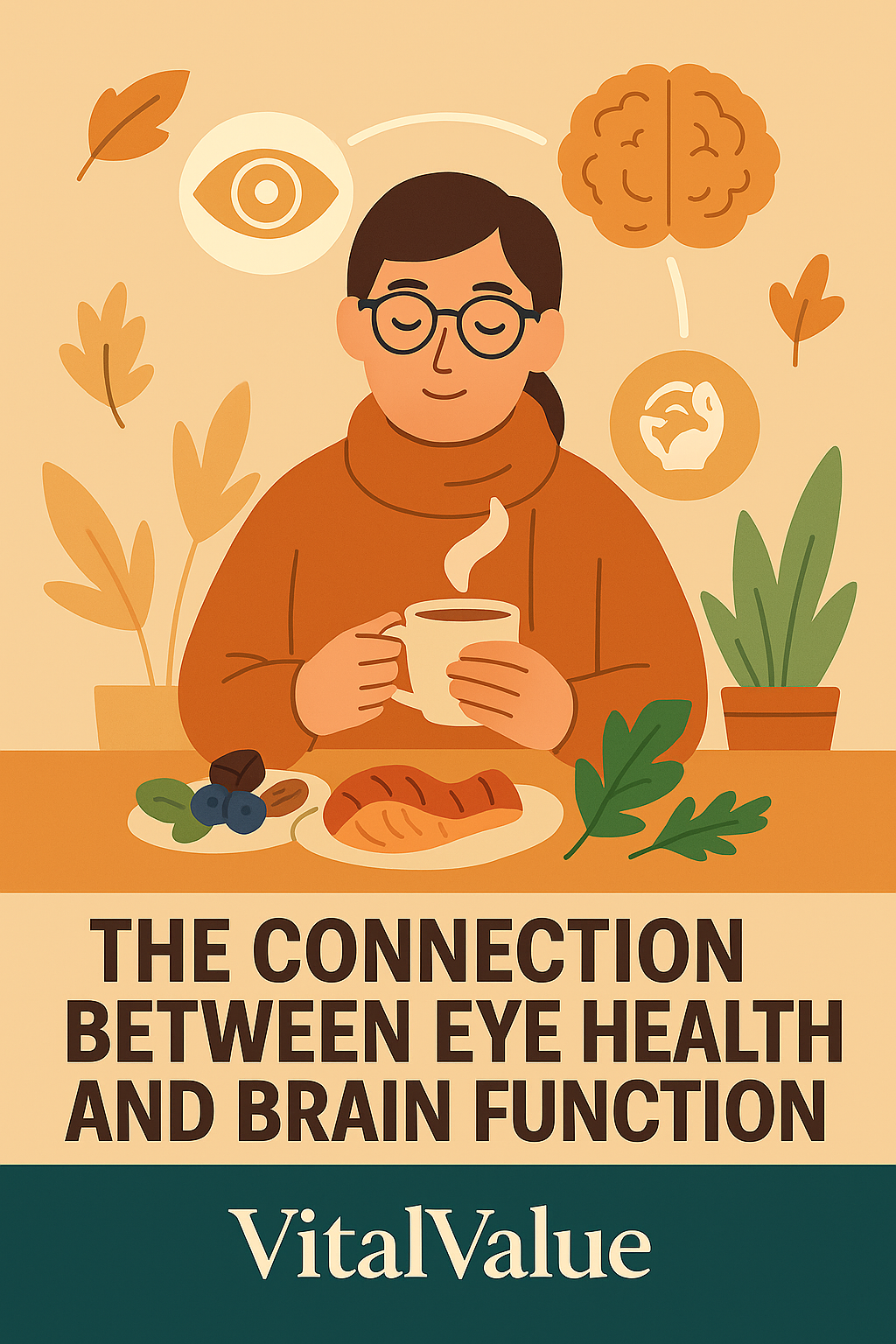
🧩 How Eye Health Affects the Brain
- Visual processing power
Clear, healthy vision reduces strain and frees mental energy for other tasks. - Cognitive load
Poor eyesight makes the brain work harder, leading to fatigue and slower processing. - Neurodegenerative links
Research shows conditions like glaucoma or retinal changes may be early indicators of brain decline. - Emotional impact
Vision loss often increases isolation or depression, indirectly affecting brain health.
👉 Caring for your eyes is a way of caring for your brain.
🌱 Daily Habits That Support Both Eye and Brain
- Follow the 20-20-20 rule
Every 20 minutes, look at something 20 feet away for 20 seconds to reduce eye strain. - Eat vision-friendly foods
Carrots, leafy greens, berries, and fish rich in omega-3s support both retina and cognition. - Stay hydrated
Dry eyes often come from dehydration, which also affects mental energy. - Protect from UV light
Sunglasses prevent long-term damage to both eyes and surrounding tissues. - Rest your eyes
Sleep allows both the brain and eyes to repair and reset.
🥗 Foods That Benefit Eyes and Brain Together
- Blueberries: Antioxidants for memory and retinal health.
- Spinach and kale: Lutein and zeaxanthin protect against eye strain.
- Walnuts and salmon: Omega-3s maintain neural and retinal health.
- Oranges: Vitamin C supports blood vessels in the eyes and brain.
- Dark chocolate (moderate): Flavonoids boost blood flow to both organs.
🌿 A Gentle Daily Routine
- Morning: Step outside for natural light exposure—it regulates circadian rhythm and eye function.
- Daytime: Use breaks from screens to walk or gaze into the distance.
- Afternoon: Snack on nuts or fruit rich in antioxidants.
- Evening: Dim lights and avoid screens an hour before bed to rest eyes and brain.
- Night: Ensure 7–8 hours of sleep for neural and visual repair.
🍁 Lifestyle Support Beyond Food and Rest
- Regular eye exams: Detect early changes that may also reflect brain health.
- Exercise consistently: Improves circulation, supporting both vision and cognition.
- Manage chronic conditions: Diabetes and hypertension impact eye vessels and brain function.
- Stay mentally engaged: Reading, puzzles, or learning keep both eyes and brain active.
🌙 Wrap-Up: Seeing Clearly, Thinking Clearly
Your eyes don’t work alone—they are extensions of the brain. By protecting vision with nourishing foods, mindful screen use, and regular rest, you also protect cognitive clarity and resilience.
Healthy eyes support a sharper mind. This week, let each glance be a reminder: caring for what you see also strengthens how you think, remember, and connect.


