A musty smell or sudden stains can signal hidden mold in walls or furniture. Simple visual checks and regular airflow keep your home clean and the air healthier to breathe.
Do you ever notice a musty smell in your bedroom or living room, yet see no visible mold?
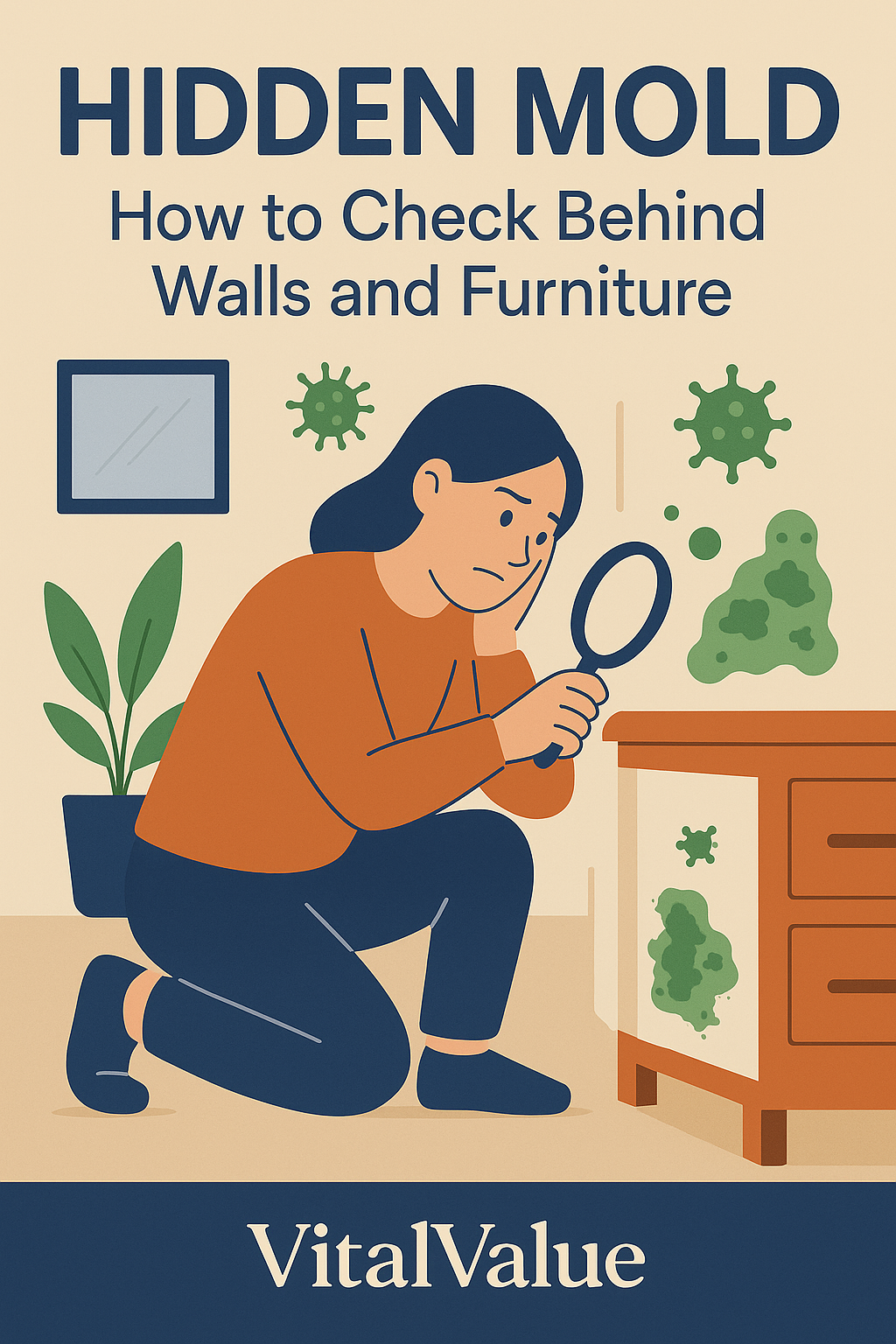
Often, it hides behind walls, wardrobes, or large furniture where moisture quietly gathers.
A quick check of these hidden spots now and then is a simple habit that can save you from bigger problems later.
✨ If indoor air feels stale,
start investigation with [How to Reduce Humidity Without a Dehumidifier — Simple Home Hacks].
🏠 Cause & Background — Why Mold Grows in Hidden Areas
Poor Air Circulation
When furniture sits tightly against walls, air can’t flow freely.
Trapped humidity collects behind heavy pieces, creating the perfect still, damp pocket where mold begins to form.
Condensation
Cold exterior walls meet warm indoor air, producing invisible droplets that cling to the surface.
Over time, these damp patches become quiet breeding grounds for mold, especially in poorly ventilated rooms.
Leaks and Moisture
Small plumbing drips or roof leaks often go unnoticed until dark stains or a musty smell appear.
Even slow moisture buildup behind tiles or under flooring can create ideal mold conditions.
Dust and Organic Material
Hidden corners collect dust, fabric fibers, and organic matter — natural food for mold spores.
Left untouched, these spots quietly support growth even when the rest of the home feels clean.
🏡 Related Home Care Tips
- For allergy-friendly cleaning, read
[Allergy-Friendly Cleaning Products: A Healthy Home Guide]
🛠 Practical Solutions — How to Check for Hidden Mold
🎨 Look for Discoloration
Check walls, window frames, and the backs of furniture for faint yellow, green, or black stains.
Even small patches can spread quietly if left unnoticed.
👃 Smell the Air
A persistent musty or earthy scent near walls or corners is often the first sign of hidden mold.
Trust your nose — it usually detects change before the eyes do.
💧 Check for Moisture
Touch the wall gently or use a simple moisture meter.
If it feels cool or damp, that area needs airflow and inspection.
🪑 Move Furniture Periodically
Every few months, pull wardrobes, beds, or sofas slightly away from the wall.
This simple habit releases trapped humidity and lets you spot early mold growth.
🧹 Inspect Baseboards and Corners
Mold often begins where air circulation is weakest — near floorboards, under wallpaper, or behind shelves.
A quick look during cleaning can prevent long-term buildup.
🔦 Use a Flashlight
Shine light along the surface at a low angle.
Uneven texture, dull patches, or shadowed spots often reveal what the eyes alone might miss.
✨ Look for discoloration, musty odors, and water damage signs —
pair this with [Smart Ways to Prevent Mold Growth After Heavy Summer Rain].
📌 Fact Box — Hidden Mold Signs
- Musty smell without visible stains
- Wall paint bubbling or peeling
- Furniture backing feels damp
- Allergies worsen indoors but improve outdoors
✅ Quick Checklist — Mold Inspection Routine
- Move furniture away from walls every 2–3 months
- Smell and inspect dark corners regularly
- Check for peeling wallpaper or stains
- Keep indoor humidity between 40–50%
- Use natural cleaners at the first sign of mold
✨ A Small Reminder
Mold hidden behind walls or furniture can quietly harm both your health and your home.
By making regular inspections part of your routine and keeping humidity under control, you can stop it before it spreads — leaving your space fresh, safe, and inviting.
Keep your space fresh with
'Health' 카테고리의 다른 글
| How to Remove Musty Smells from Your Bedroom (0) | 2025.08.30 |
|---|---|
| How to Prevent Dust Mite Allergies in Summer (0) | 2025.08.30 |
| Summer Humidity and Allergies: Why They Get Worse (0) | 2025.08.29 |
| How to Keep Your Bedding Dry and Fresh in Summer (0) | 2025.08.29 |
| Mask Acne in Summer: Prevention Tips for Clear Skin (0) | 2025.08.29 |


