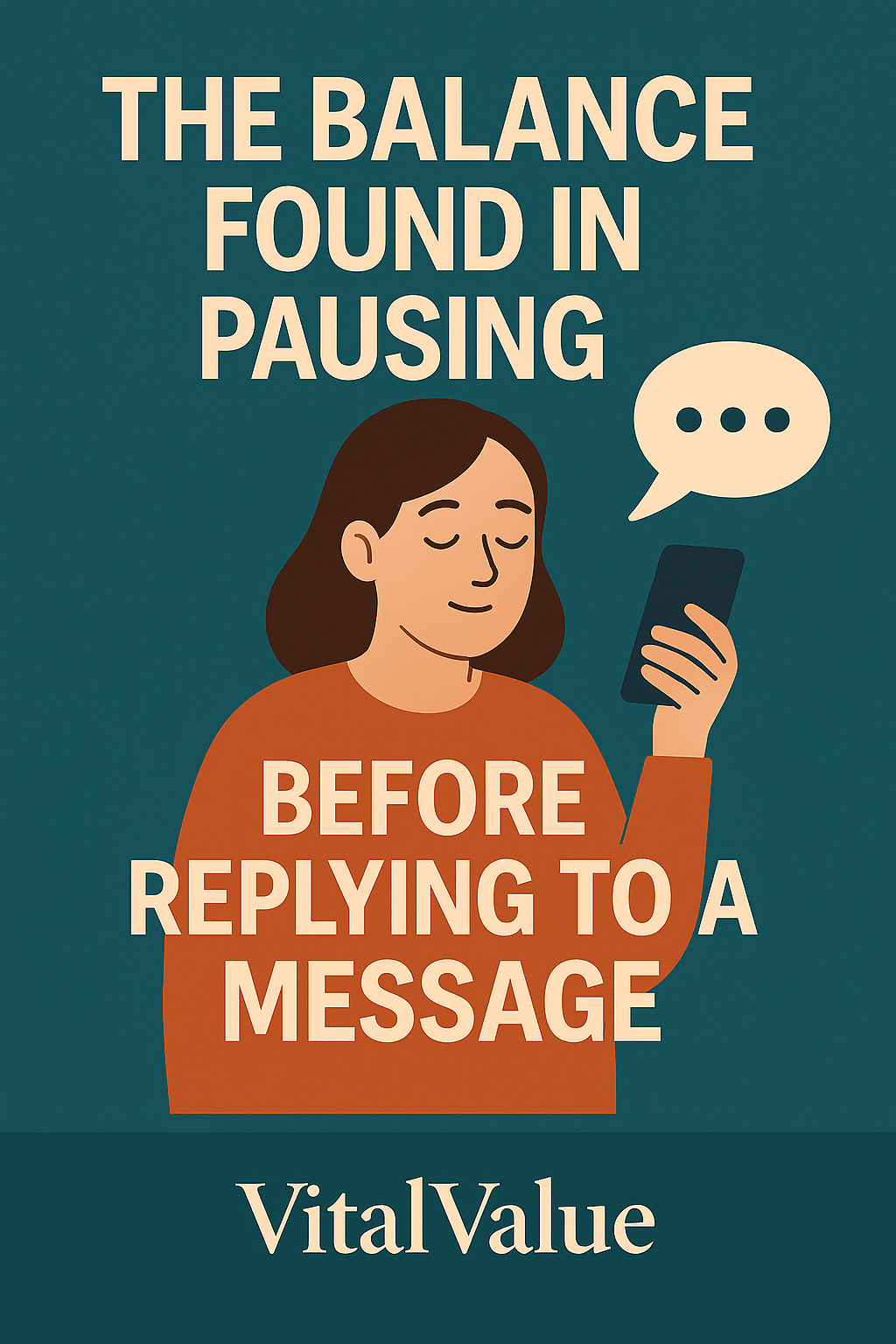
Before hitting “send,” take a breath.
That small pause can clear emotion, bring perspective, and turn your reply into something calm and real.
A notification lights up.
You read it. You already know what you want to say.
Your thumbs start moving before your thoughts even arrive.
The world has trained us to answer quickly—
to fill silence, to prove presence, to stay caught up.
But somewhere between receiving and replying
lies the small, overlooked space where balance lives.
It’s only a few seconds long,
yet it can change how the whole exchange feels.
💭 Why the Pause Matters
Instant replies satisfy urgency, not understanding.
That extra breath before responding isn’t delay—it’s discernment.
Psychologists call this response latency:
the gap between emotion and expression.
Within that gap, emotional intelligence grows.
When you pause, you notice tone—yours and theirs.
You ask silently, Am I reacting, or am I communicating?
That awareness turns conversations from reflex into connection.
🌿 How to Practice the Art of Digital Stillness
🕯️ 1. Feel the Urge, Don’t Fight It
When a message arrives, notice the pull to reply instantly.
Awareness is the first step; resistance isn’t necessary.
Just breathe once before touching the screen.
💧 2. Read Twice, Softly
The first read catches words; the second reads emotion.
Ask yourself, What’s really being said here?
Often, the meaning shifts when you give it space.
🌸 3. Breathe Before You Type
Inhale for four counts, exhale for six.
The longer exhale triggers calm response instead of defensive tone.
You’re not silencing emotion—you’re softening it.
🌾 4. Write, Then Wait
If it’s sensitive, type your reply but don’t send it yet.
Look away for ten seconds.
Most messages improve with that small breath of distance.
🌙 5. End with Intention
Before hitting send, ask:
Is this honest, kind, and necessary?
If two out of three are true, your message will land well.
💆 The Emotional Science of Waiting
Delaying response by even a few seconds engages the prefrontal cortex—
the part of the brain responsible for empathy and reasoning.
Meanwhile, the amygdala—the emotional alarm—gets time to settle.
This means your pause isn’t hesitation; it’s neurological grace.
You’re choosing maturity over momentum.
Every mindful delay you create online
reduces cumulative stress from constant digital demand.
🌼 Pairing This Practice with Daily Life
- Morning: before replying to emails, read them all once first, then begin calmly.
- Afternoon: silence notifications for ten minutes to reset focus.
- Evening: answer only messages that truly require your energy.
Digital peace isn’t disconnection—it’s pacing.
💫 What This Teaches Beyond Screens
The same pause that softens online words
also transforms in-person exchanges.
It teaches patience in conversation, restraint in conflict,
and compassion in moments of misunderstanding.
In every pause, you give space for truth to catch up.
💓 A Quiet Note Before You Hit Send
You don’t owe instant access to anyone.
You owe yourself presence before response.
So next time your screen lights up,
let your hands rest for a moment.
Let breath enter where reaction once lived.
Because sometimes, peace begins not with silence—
but with one small, thoughtful pause.
'Wellness' 카테고리의 다른 글
| Placing a Glass of Water Beside the Bed for Comfort and Calm (0) | 2025.11.30 |
|---|---|
| Waiting for the Kettle to Boil for Hidden Calm (0) | 2025.11.29 |
| Making the Bed for Yourself for Quiet Confidence (0) | 2025.11.29 |
| Why Opening a Window Before Sleep Refreshes the Mind (0) | 2025.11.29 |
| Washing Your Face Slowly for Gentle Mental Clarity (0) | 2025.11.28 |


