Dizziness can become more common in early spring, as temperature swings, pollen, pressure changes, and hydration shifts affect the inner ear and circulation.
Understanding why balance feels unsteady and using gentle practices can help restore stability.
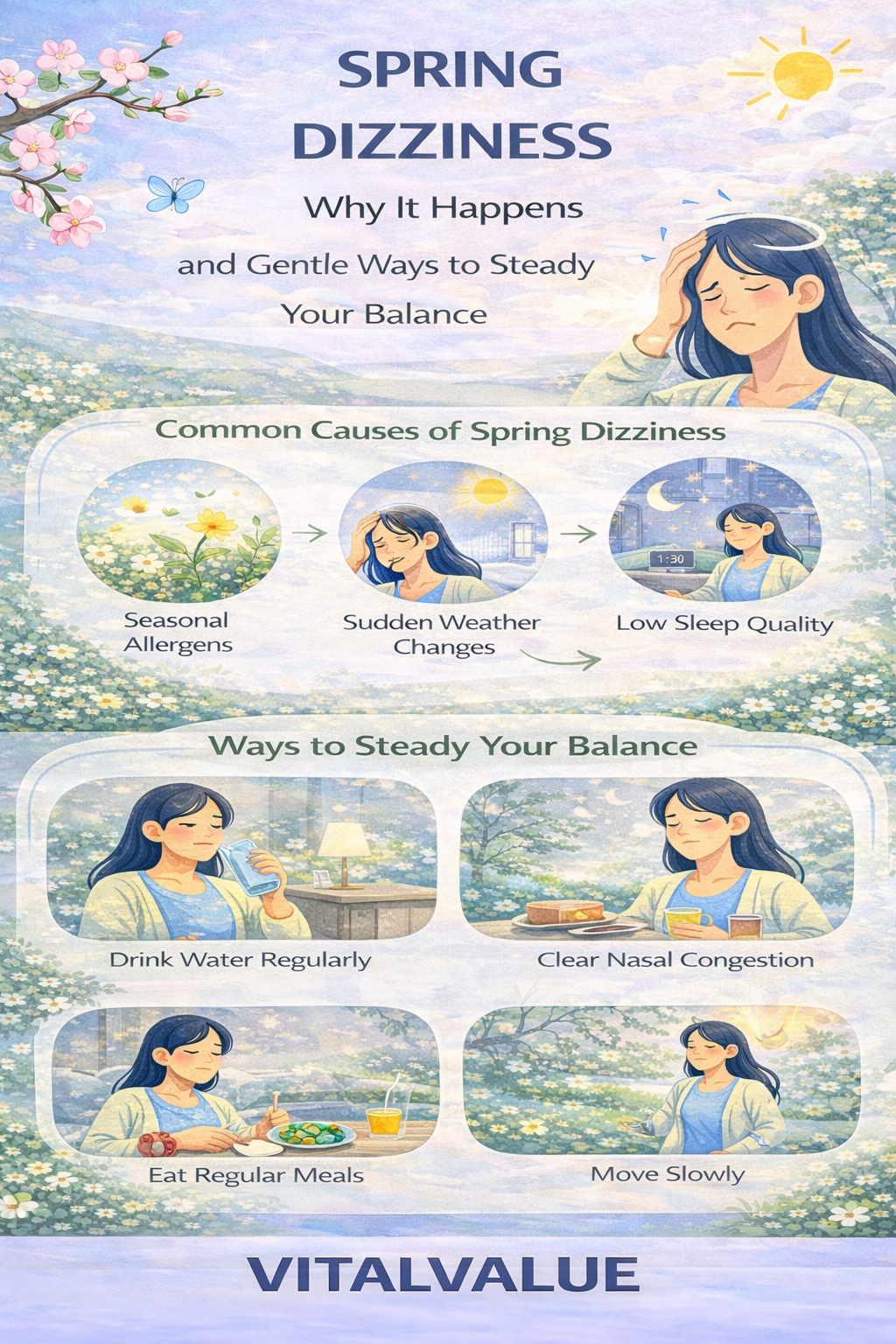
🌱 When Spring Brings a Light, Unsettling Sense of Dizziness
Early spring can introduce brief episodes of lightheadedness or mild disequilibrium. The sensation is usually subtle rather than dramatic—a momentary floatiness when standing, a gentle sway while turning the head, or a short-lived spinning feeling on windy days. It may appear in the morning, after rapid posture changes, or during sudden weather transitions.
In many cases, this type of dizziness is not linked to infection or neurological disease. Instead, it reflects how sensitive the vestibular system—the inner ear structures responsible for balance—is to environmental change.
Several early-spring factors influence balance regulation:
• Rapid temperature shifts affecting circulation
• Barometric pressure fluctuations altering inner-ear pressure dynamics
• Increased pollen exposure triggering mild inflammation
• Wind stimulating sensory input around the head and neck
• Low humidity contributing to subtle dehydration
• Changes in daylight affecting circadian and autonomic regulation
The inner ear relies on stable fluid pressure and coordinated sensory input from vision and proprioception. When atmospheric pressure shifts quickly, or when circulation changes during cold-to-warm transitions, the vestibular system must recalibrate. Even minor adjustments can briefly alter spatial perception.
Seasonal allergens may also contribute. Mild inflammation in the nasal passages and Eustachian tubes can affect pressure balance between the middle and inner ear, leading to transient imbalance.
Additionally, longer daylight hours influence autonomic tone and hydration patterns. Mild dehydration—common during windy or dry conditions—can reduce blood volume slightly, increasing the likelihood of lightheadedness upon standing.
Most spring-related dizziness episodes are short and self-limited. Gradual movements, steady hydration, balanced indoor humidity, and minimizing abrupt posture changes support vestibular stability.
Recognizing the seasonal context helps reduce unnecessary alarm. As atmospheric patterns stabilize and the body adapts to longer, brighter days, these light balance fluctuations typically decrease in frequency and intensity.
🌿 Why Dizziness Appears More Often in Early Spring
Mild dizziness during early spring often reflects how sensitive the vestibular system and circulation are to environmental change. Several overlapping seasonal factors influence balance regulation, creating sensations that feel distinctly “spring-like.”
Temperature swings affect blood flow
Cool mornings encourage blood vessel constriction, while warmer afternoons promote dilation. Rapid transitions can briefly affect blood pressure regulation, increasing the likelihood of lightheadedness when standing or turning quickly.
Pollen irritates the sinuses and affects the inner ear
Seasonal allergens may irritate nasal passages and Eustachian tubes. Even mild swelling can alter pressure equalization between the middle ear and surrounding air, affecting balance perception.
Dry air dehydrates the nasal and inner-ear lining
Low humidity increases moisture loss through breathing. Mild dehydration can influence blood volume and the fluid dynamics within the inner ear, contributing to transient unsteadiness.
Spring storms cause barometric pressure drops
Spring storms and fast-moving weather systems cause rapid pressure changes. The inner ear must constantly recalibrate to these shifts, sometimes resulting in brief sensations of imbalance.
Wind overstimulates the nervous system
Windy conditions stimulate facial nerves and trigger subtle muscular bracing around the neck and shoulders. This heightened sensory input can temporarily disturb spatial awareness.
Shallower breathing reduces oxygen flow
Shallower breathing due to dryness, tension, or mild allergy symptoms may reduce oxygen efficiency, which can amplify feelings of lightheadedness.
Lingering winter inactivity affects circulation
After months of lower movement levels, cardiovascular and vestibular systems may respond more slowly to sudden posture or environmental changes in early spring.
In most cases, seasonal dizziness is short-lived and improves with steady hydration, gradual movements, balanced humidity, and consistent activity. As atmospheric patterns stabilize and the body adapts to longer, brighter days, balance sensations typically become steadier.
🍃 How Spring Dizziness Feels Throughout the Day
Seasonal dizziness in early spring is often brief and fluctuating rather than constant. It shifts with posture, temperature, airflow, and hydration levels.
You may notice:
• A light floating sensation when standing up
• Mild spinning during quick head turns
• A sense of fullness or light pressure in the ears
• Lightheadedness after prolonged sitting
• Increased unsteadiness on windy days
• A warm, slightly foggy feeling behind the eyes
• Noticeable improvement after slow breathing or hydration
These symptoms typically appear in short waves. As circulation stabilizes or environmental stimulation decreases, balance often returns quickly.
🌬 How Spring Weather Intensifies the Sense of Imbalance
Early spring environments change rapidly, requiring constant recalibration from the vestibular and circulatory systems.
• Wind increases sensory input around the face and neck
• Cool mornings may slow inner-ear fluid responsiveness
• Warmer afternoons increase evaporation and mild dehydration
• Barometric pressure changes create ear fullness or popping sensations
• Bright light overstimulates visual pathways involved in balance
• Dry air increases sinus irritation, affecting pressure regulation
Rainy or humid days often feel more stable because moisture levels rise, wind slows, and sensory stimulation decreases.
🧩 Everyday Habits That Quietly Make Spring Dizziness Worse
Routine behaviors can amplify seasonal imbalance.
• Standing abruptly after sitting or lying down
• Inadequate hydration throughout the day
• Shallow breathing during stress
• Prolonged sitting without circulation breaks
• Opening windows during windy, high-pollen periods
• Ignoring mild ear pressure changes
• Using bright screens immediately upon waking
• Holding tension in the shoulders or jaw
Individually, these habits seem minor. Combined with spring’s environmental shifts, they can intensify lightheadedness or imbalance.
Gradual posture changes, steady hydration, balanced lighting, regular movement, and relaxed breathing often reduce the frequency and intensity of seasonal dizziness as the body adapts to the changing season.
🌸 Ten Gentle Ways to Steady Your Balance in Early Spring
Seasonal dizziness improves when circulation, hydration, breathing, and sensory input are stabilized. Rather than trying to suppress the sensation, these habits support the body’s natural recalibration.
- 💧 Maintain Steady Hydration
Adequate fluid intake supports blood pressure stability and inner-ear fluid balance, reducing lightheadedness. - 🚶♀️ Take Slow, Grounded Walks
Gentle walking improves circulation and reinforces proprioceptive signals that help the brain maintain balance. - 🌤 Limit Exposure to Windy Morning Conditions
Wind increases sensory stimulation and may irritate sinuses and ear pressure regulation. Gradual exposure is easier on the vestibular system. - 😌 Practice Slow, Diaphragmatic Breathing
Deep breathing improves oxygen delivery and reduces sympathetic nervous system activation that can amplify dizziness. - 🌬 Maintain Balanced Indoor Humidity
Moderate humidity supports sinus comfort and helps stabilize pressure around the ears. - 🤲 Release Neck and Shoulder Tension
Muscle tightness in the cervical region can interfere with balance signals. Gentle stretching supports posture and spatial awareness. - 👚 Change Clothing After Outdoor Exposure
Reducing pollen and dust contact lowers sinus irritation that may affect ear pressure. - 🐾 Wipe Pets After Walks
Minimizing allergen transfer indoors reduces inflammation that can influence equilibrium. - 🌤 Soften Visual Input
Limit glare and bright light during peak sun hours. Balanced lighting reduces visual strain that can worsen dizziness. - 🛏 Refresh Bedding Regularly
Clean pillowcases reduce nighttime sinus congestion, supporting steadier balance upon waking.
With consistent hydration, gradual movement, reduced sensory overload, and balanced environmental conditions, early-spring dizziness typically becomes less frequent as the body adapts to seasonal change.
🌙 Why Dizziness Feels Strongest in the Morning and Afternoon
Seasonal dizziness often follows predictable timing patterns, especially during early spring when environmental shifts are frequent.
In the morning
• Inner-ear fluid circulation slows during sleep and needs time to readjust
• Cool air encourages temporary blood vessel constriction
• Overnight dryness may irritate the sinuses and Eustachian tubes
• Rapid changes from dim indoor light to bright outdoor light challenge visual balance
These combined factors can make the first movements of the day feel slightly unsteady.
In the afternoon
• Warmer air increases fluid evaporation, contributing to mild dehydration
• Wind speed often rises, increasing sensory stimulation
• Barometric pressure fluctuations become more noticeable
• Accumulated fatigue heightens sensitivity to balance changes
By midday or late afternoon, the body has already adjusted repeatedly to temperature and airflow changes, which can amplify lightheadedness.
Steady hydration, gradual posture changes, controlled breathing, and gentle warming movements often restore stability quickly.
🌾 Understanding Your Body’s Seasonal Balance
Early-spring dizziness reflects adaptation rather than fragility. The vestibular system, circulation, and visual pathways respond continuously to wind, pressure shifts, light intensity, and temperature variability.
With consistent support—hydration, balanced indoor humidity, moderate light exposure, relaxed breathing, and regular movement—equilibrium typically becomes steadier as the season stabilizes.
Grounded, repeatable routines help the nervous system recalibrate, allowing balance to feel clearer and more secure with each passing spring day.
'Health' 카테고리의 다른 글
| Frequent Sneezing in Spring: Allergy Triggers and Prevention (0) | 2026.04.09 |
|---|---|
| Spring Water Retention: Causes and How to Reduce Bloating (0) | 2026.04.08 |
| Head Pressure in Spring: Causes and How to Relieve It (0) | 2026.04.06 |
| Energy Crashes in Spring: Causes and How to Stabilize Levels (0) | 2026.04.05 |
| Itchy Eyes in Spring: Causes and How to Stop the Itching (0) | 2026.04.04 |


