Many people experience ear pressure, fullness, or muffled hearing in early spring due to pollen, weather changes, and congestion affecting the inner ear.
Understanding why this occurs and using gentle methods can help relieve the heaviness and improve comfort.
🌱 When Spring Shows Up First in Your Ears
Before trees turn fully green or flowers open, some people sense spring in a quieter way—through their ears. A mild pressure builds, sounds feel slightly muted, or one ear suddenly seems more blocked than the other. You may swallow, yawn, or try to equalize the pressure, only to find the sensation lingers. It isn’t painful, but it feels unfamiliar and distracting.
This ear fullness often appears:
• After waking on a cool spring morning
• On windy days with rising pollen
• During outdoor walks when air conditions shift quickly
• After moving from cool outdoor air into a warm indoor space
Because it doesn’t resemble a typical cold and may occur without obvious nasal symptoms, the sensation can feel confusing. Still, it’s a common early sign that the body is responding to seasonal changes. Understanding why the ears react this way makes it easier to approach the sensation calmly and find gentle, steady relief.
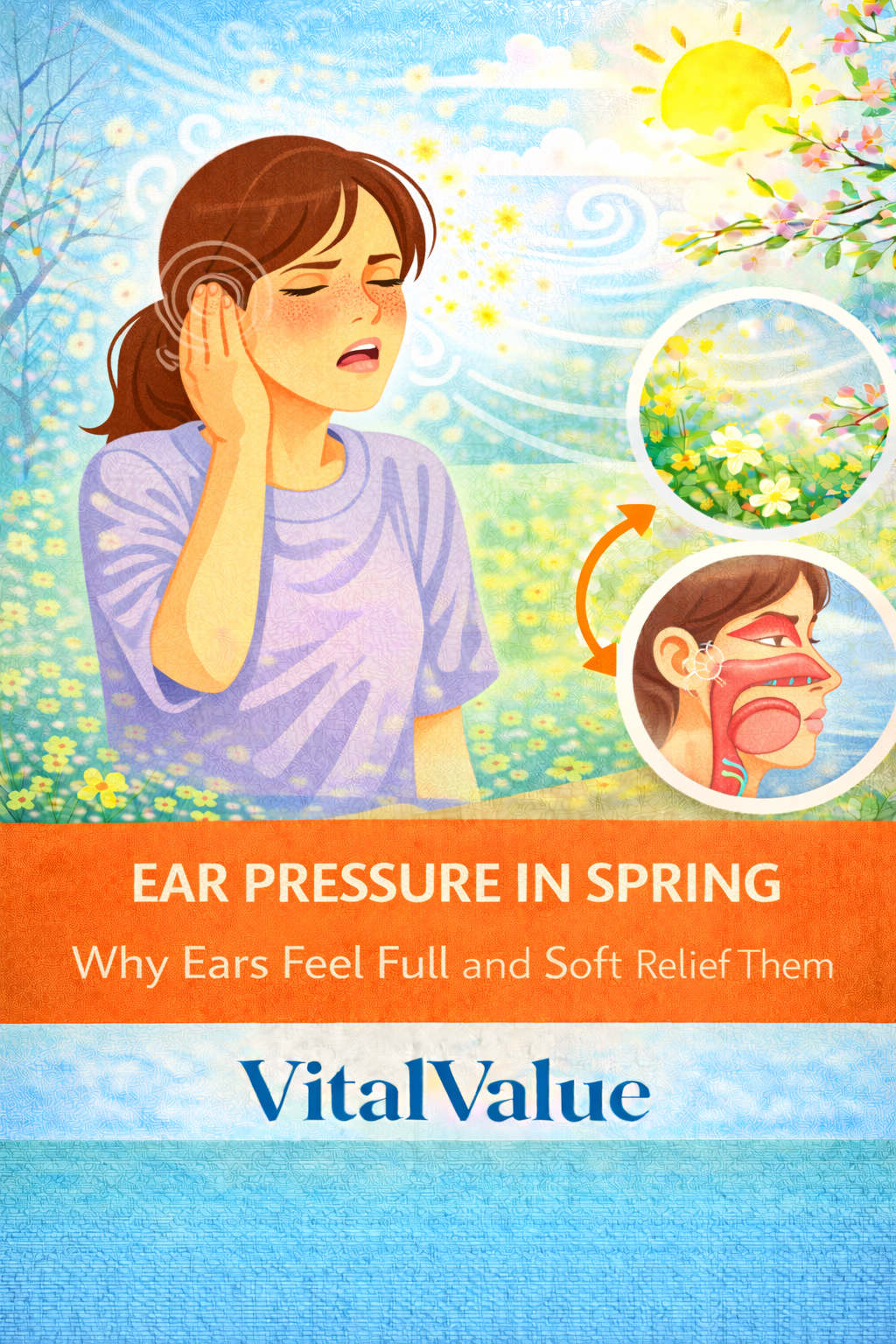
🌿 Why Ear Pressure Increases in Early Spring
The ears are closely connected to the nose and throat, even though that link isn’t always obvious. A narrow passage called the eustachian tube connects the middle ear to the back of the nose. Its role is to balance pressure on both sides of the eardrum and allow small amounts of fluid to drain smoothly.
In early spring, several subtle changes interfere with this system.
1. Nasal and sinus swelling
Dry air, early pollen, and frequent temperature shifts irritate the nasal passages. Even mild swelling deep inside the nose can narrow the opening of the eustachian tube. When this happens, air and fluid inside the middle ear move less freely, creating a feeling of fullness or pressure.
2. Subtle congestion and post-nasal drip
You may not feel obviously congested, yet a small increase in mucus near the back of the nose can affect how easily the tube opens when you swallow or yawn. If the tube doesn’t open fully, pressure becomes trapped.
3. Pressure changes in the environment
Spring weather shifts quickly. Changes in atmospheric pressure—common on windy days, before rain, or during sudden temperature swings—are felt more strongly by sensitive ears, adding to the sensation of blockage.
4. Dry air and irritated linings
Lingering indoor heating and cool outdoor air keep humidity low. Dry, irritated linings in the nose and throat can make the eustachian tube more reactive and slower to adjust.
These sensations don’t signal a serious problem. They reflect the ears adjusting to a season where light, air, humidity, and pollen are all changing at once.
🍃 How Ear Pressure Actually Feels Day to Day
Spring-related ear pressure is usually subtle rather than dramatic. It tends to show up as a combination of small, recurring sensations that fluctuate throughout the day.
You may notice:
• A mild fullness or “plugged” feeling in one or both ears
• Sounds feeling slightly muffled, especially your own voice
• An urge to swallow repeatedly in an attempt to “pop” the ears
• A faint clicking or crackling when swallowing or yawning
• Brief lightheadedness when pressure shifts quickly
• Ears feeling heavier after a windy walk and more comfortable after a warm shower
These sensations often come and go. Some days feel completely normal, then a small change in weather, wind, or pollen brings the heaviness back. Once the pattern becomes familiar, it tends to feel less random and far less concerning.
🌬 Weather, Pollen, and the Ears’ Spring Mood
The ears quietly register changes in the environment. In early spring, they respond not only to pollen but also to shifts in air pressure and temperature.
Wind stirs pollen and pushes cool air into the nose and throat. This can cause slight swelling in the lining, slowing drainage through the eustachian tube.
Dry air reduces the flexibility of the nose and throat lining, making the tube less responsive and slower to open.
Atmospheric pressure changes before storms or sudden weather shifts often create a heavier, “underwater” sensation in the ears.
Cool mornings followed by warm afternoons force blood vessels to tighten and relax repeatedly, affecting the delicate structures connected to ear pressure balance.
Rain frequently brings temporary relief by settling pollen, restoring moisture to the air, and easing rapid pressure changes that the ears struggle to adapt to.
Together, these shifting conditions explain why the ears can feel unsettled during early spring, even without pain or clear congestion.
🧩 Everyday Habits That Quietly Worsen Ear Fullness
Spring ear pressure isn’t caused by weather alone. Several everyday habits can quietly add strain and make pressure harder to regulate.
Spending long hours in very dry indoor air
Sleeping with the head flat and heavy blankets close to the neck
Blowing the nose forcefully when congestion is mild
Repeatedly trying to pop the ears too aggressively
Keeping windows open during high-pollen morning hours
Wearing tight hats, headbands, or earbuds for extended periods
Bringing outdoor clothing or pollen-covered items onto the bed
None of these habits are harmful on their own. Combined, however, they make it more difficult for the ears to balance pressure smoothly during early spring.
🌸 Ten Gentle Ways to Ease Spring Ear Pressure
Relief from spring ear pressure is usually subtle rather than dramatic. The aim is to help the eustachian tubes open and close more comfortably while calming irritation around the nose and throat.
- 💧 Hydrate to support smooth mucus flow
Adequate hydration keeps mucus thinner and easier to move. When the nose and throat stay well hydrated, the eustachian tubes tend to function more smoothly. - 🌤 Choose outdoor timing carefully
Windy early mornings often combine pollen and pressure shifts. Short walks later in the afternoon or after rainfall are generally gentler on the ears. - 😴 Slightly elevate the head during sleep
Sleeping with the head modestly raised supports drainage and can reduce the heavy, blocked feeling in the ears upon waking. - 🚿 Use warm steam to ease tightness
A warm shower or gentle steam inhalation helps relax the nasal passages and surrounding tissues, making pressure equalization easier. - 👃 Blow the nose gently
Forceful blowing can push pressure toward the ears. Gentle blows, one nostril at a time, are kinder to sensitive ear structures. - 🧘 Release tension in the jaw, neck, and shoulders
The eustachian tubes run close to muscles in the jaw and upper neck. Relaxing these areas often eases ear pressure more than expected. - 👚 Keep outdoor layers away from bedding
Scarves, jackets, and hair collect pollen. Keeping them away from pillows and bedding helps reduce nighttime irritation that affects the ears. - 🌬 Maintain comfortable indoor humidity
Balanced humidity keeps nasal tissues calm and less reactive, reducing small pressure changes that travel to the ears. - 🐾 Wipe pets after outdoor time
Pet fur carries pollen that can irritate the nose and sinuses, indirectly affecting ear pressure. A quick wipe can noticeably help. - 🍵 Use warm drinks to relax the throat
Warm water or herbal tea helps relax throat muscles near the eustachian tubes. Slow swallowing can encourage gentle pressure release without forcing it.
These steady, supportive habits help ear pressure soften gradually as the spring season continues to settle.
🌙 Why Ear Pressure Often Feels Worse at Night and Morning
Ear pressure is often most noticeable when everything is quiet—late at night or just after waking. During these times, several subtle factors come together.
You’re more aware of internal sensations, such as fullness, heaviness, or faint clicking, when external distractions are minimal.
Lying flat changes how blood flow and fluid distribute around the head and ears.
Indoor air is typically drier overnight due to closed windows or heating.
Mucus has hours to settle because swallowing and movement slow during sleep.
Once you begin the day—hydrating, sitting upright, moving gently, or taking a warm shower or drink—the pressure usually softens on its own as the ears and surrounding tissues readjust.
🌾 Listening to What Your Ears Are Telling You
Spring ear pressure is rarely a sign that something is wrong. More often, it’s the ears quietly responding to change—the air is shifting, pressure is moving, and the upper airways are working to adapt.
When you respond with small, supportive adjustments—adding moisture, choosing gentler airflow, and keeping daily routines soft and steady—the ears usually follow. Over time, the sense of heaviness begins to release on its own.
Gentle awareness and consistent, unforced habits help the ears move through early spring with greater ease and less lingering fullness.
'Health' 카테고리의 다른 글
| Spring Neck and Shoulder Tension: Why It Increases and How to Release It Naturally (0) | 2026.03.18 |
|---|---|
| Spring Cough: Causes and How to Calm It (0) | 2026.03.17 |
| Spring Sneezing Fits: Causes and How to Relieve Them (0) | 2026.03.15 |
| Post-Sleep Congestion in Spring: Why It Happens and Ways to Ease It (0) | 2026.03.14 |
| Dry Throat in Spring: Common Causes and Simple Ways to Soothe It (0) | 2026.03.13 |


