Low motivation is common in early spring, as energy rhythms shift, daylight increases, and the body adjusts to seasonal changes.
Understanding why motivation dips and adopting gentle habits can help you feel more engaged and grounded.
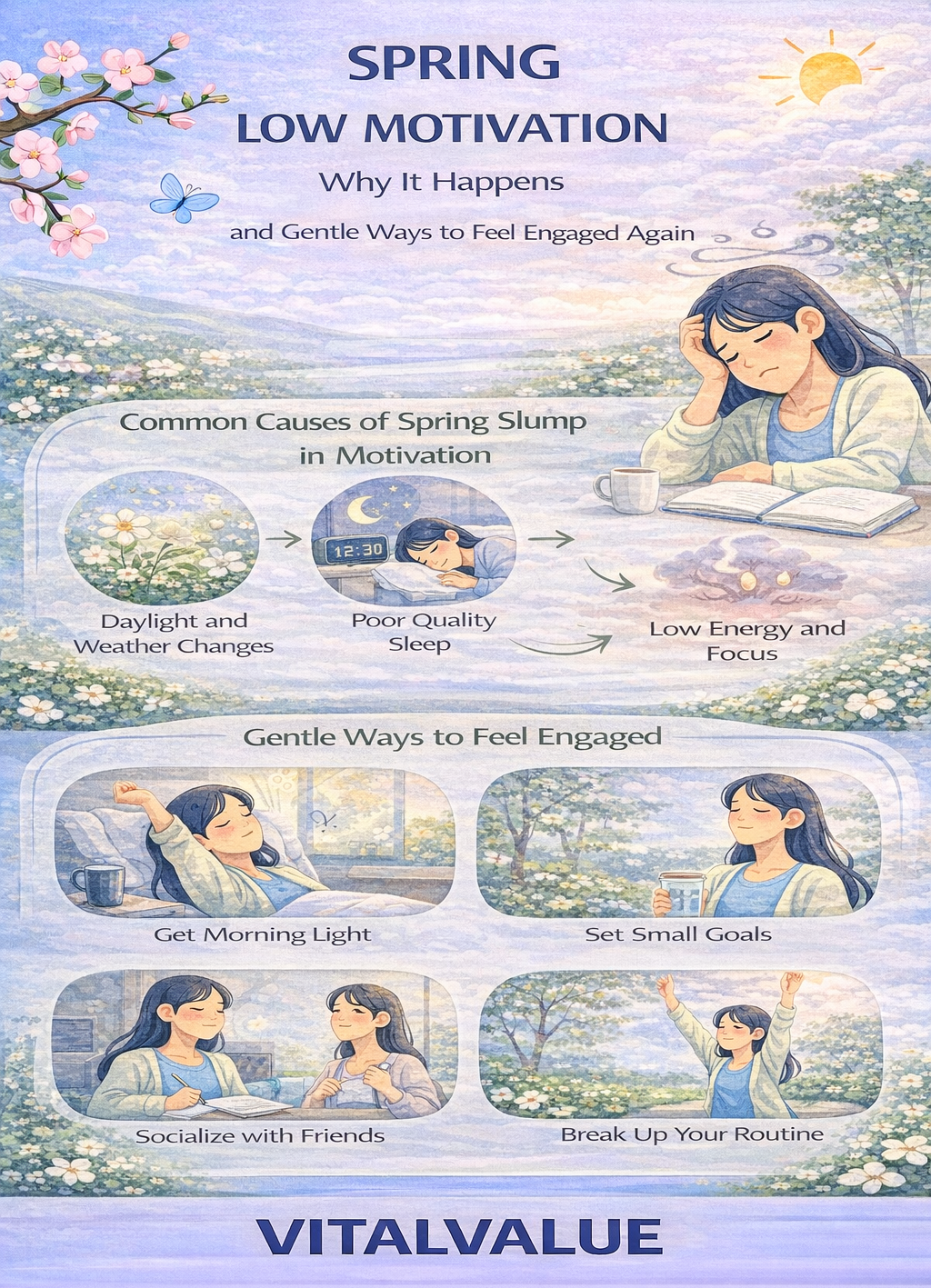
🌱 When Spring Brings Light Outside but Low Motivation Inside
Early spring appears energizing on the surface. Mornings are brighter, daylight lasts longer, and outdoor activity increases. Yet many people experience a quiet decline in motivation during this same period. Waking up can feel heavier. Focus may weaken. Tasks that once felt manageable require more effort. Emotionally, there may be a flat or muted quality despite the season’s visual brightness.
This pattern is common during seasonal transition. A temporary drop in drive does not indicate laziness or lack of discipline. It reflects the body’s adjustment to rapid environmental change.
After winter’s slower rhythm, longer daylight exposure shifts circadian timing. Hormonal signals regulating alertness, mood, and energy begin recalibrating. Temperature fluctuations also demand repeated physiological adaptation. These overlapping adjustments can briefly disrupt internal momentum.
Recognizing this seasonal recalibration allows you to respond with steadiness rather than self-criticism. Motivation often returns naturally as the body stabilizes to spring’s new rhythm.
🌿 Why Low Motivation Appears in Early Spring
Motivation is closely linked to biological rhythm, light exposure, temperature stability, and immune activity. Early spring alters all of these at once, which can temporarily lower internal drive.
Longer daylight shifts circadian timing
As sunrise arrives earlier and evenings extend, the sleep–wake cycle adjusts gradually. Energy levels often lag behind increasing daylight, making days feel longer before alertness stabilizes.
Temperature fluctuations increase physical demand
Cool mornings require additional metabolic energy to maintain warmth, while warmer afternoons activate cooling mechanisms. These repeated adjustments consume energy quietly throughout the day.
Allergens trigger low-grade inflammation
Even mild immune activation can influence neurotransmitters involved in focus and motivation, reducing mental clarity and drive.
Winter routines slow momentum
After months of reduced activity and indoor living, the nervous system adapts to a slower baseline. Transitioning into higher spring activity levels takes time.
Mood variability increases
Seasonal light changes can elevate mood in some individuals while creating restlessness or emotional instability in others. Both states can disrupt consistent motivation.
Dry air affects breathing patterns
Subtle airway irritation or shallow breathing reduces oxygen efficiency, contributing to mental fatigue.
Brighter light increases sensory load
The visual system works harder in brighter environments, which can increase neural stimulation and leave less cognitive energy available for sustained focus.
These overlapping physiological and environmental shifts explain why early spring can feel internally sluggish, even as the external world appears more vibrant.
🍃 How Spring Low Motivation Feels Throughout the Day
Seasonal dips in motivation rarely appear as dramatic mood changes. Instead, they show up through small behavioral shifts that gradually affect productivity and focus.
You may notice:
- Difficulty starting tasks you normally enjoy
- A slower, mentally foggy feeling
- Needing more frequent breaks
- Emotional neutrality rather than enthusiasm
- Less interest in planning or goal-setting
- Sitting longer than intended
- Noticeable improvement after light movement or gentle daylight exposure
These patterns reflect seasonal recalibration—not lack of discipline or personal failure.
🌬 How Spring Weather Intensifies Motivation Drops
Environmental shifts influence neurological energy more than most people realize.
- Cool, windy mornings increase metabolic demand
- Warm afternoons can create subtle fatigue
- Bright sunlight heightens sensory stimulation
- Barometric pressure changes affect mood and cognitive sharpness
- Dry air contributes to mild dehydration
- Pollen exposure increases inflammation-related sluggishness
Many individuals feel calmer and more focused on rainy days, when humidity rises and sensory stimulation softens.
🧩 Everyday Habits That Quietly Make Low Motivation Worse
Seasonal fatigue often deepens due to subtle daily patterns.
- Skipping hydration in the morning
- Working in lighting that is too dim or excessively bright
- Avoiding outdoor exposure altogether
- Using screens immediately after waking
- Remaining seated for extended periods
- Bringing pollen-covered clothing indoors
- Skipping light stretching after sleep
- Allowing small unfinished tasks to accumulate
Adjusting these habits can significantly reduce the internal heaviness that contributes to springtime motivation drops.
🌸 Ten Gentle Ways to Restore Motivation in Early Spring
Rather than forcing productivity, early spring requires steady, supportive habits that calm the nervous system and rebuild energy gradually.
1) 🌤 Start the Day With Soft Natural Light
Gentle morning light helps regulate circadian rhythm without overwhelming the visual system, supporting smoother energy activation.
2) 🚶♀️ Move Slowly but With Intention
A brief walk or light stretching signals the body to transition out of winter’s slower baseline and improves circulation to the brain.
3) 💧 Hydrate Before Beginning Work
Early hydration supports cognitive clarity and reduces fatigue linked to mild dehydration.
4) 🍵 Choose Warm Beverages
Warmth relaxes muscle tension and promotes vascular flow, easing mental heaviness.
5) 👚 Change Clothes After Outdoor Exposure
Removing pollen from clothing lowers low-grade inflammation that can contribute to sluggishness.
6) 🐾 Wipe Pets After Walks
Reducing indoor allergens supports steadier focus and breathing comfort.
7) 🌬 Maintain Balanced Indoor Humidity
Comfortable air moisture improves breathing depth and reduces dryness-related fatigue.
8) 📋 Begin With One Small, Defined Task
Starting with a manageable action activates momentum and gently re-engages motivation.
9) 🧘 Release Neck and Shoulder Tension
These areas commonly hold stress. Relaxing them can shift the body out of fatigue mode.
10) 😴 Keep a Consistent Sleep Schedule
Stable sleep strengthens hormonal balance, which directly supports mood and motivation.
Small, repeatable adjustments often restore natural drive as the body adapts to spring’s changing light and temperature patterns.
🌙 Why Low Motivation Peaks in the Morning and Early Afternoon
Why Low Motivation Peaks in the Morning and Early Afternoon
In early spring, motivation often dips at predictable times of day due to circadian adjustment, temperature shifts, and hydration changes.
Morning
- The internal clock may still be recalibrating to earlier sunrise
- Cooler, drier air can slow circulation and increase subtle fatigue
- Rapid light exposure changes stimulate the nervous system abruptly
- Sinuses may feel irritated after overnight dryness, affecting breathing comfort
These factors can make the start of the day feel heavier than expected, even after adequate sleep.
Early Afternoon
- Warmer air increases physical relaxation, sometimes tipping into fatigue
- Bright daylight can overstimulate visual and cognitive systems
- Hydration levels often decline if intake slows after morning
- Blood sugar naturally dips during mid-day metabolic cycles
As circulation stabilizes, hydration improves, and sensory load decreases, motivation typically returns. Supporting the body with light movement, steady hydration, and balanced lighting helps smooth these seasonal fluctuations.
🌾 Understanding Your Seasonal Motivation Rhythm
A drop in motivation during early spring does not reflect a personality flaw or reduced productivity. It often signals that your nervous system, hormones, and circadian rhythm are adjusting to rapid changes in light, temperature, and environmental stimulation.
Seasonal transition temporarily redistributes energy toward adaptation. As the body recalibrates, mental drive may feel inconsistent before stabilizing.
With steady sleep timing, regular hydration, balanced light exposure, and gentle movement, internal momentum typically returns over several weeks. Small, repeatable actions create stability, allowing motivation to rise naturally as spring settles into a more predictable rhythm.
'Health' 카테고리의 다른 글
| Afternoon Fatigue in Spring: Causes and How to Boost Energy (0) | 2026.03.30 |
|---|---|
| Dry Cough in Spring: Causes and How to Calm It Naturally (0) | 2026.03.29 |
| Spring Sleep Problems: Causes and How to Sleep Better (0) | 2026.03.27 |
| Nasal Drip in Early Spring: Causes and How to Relieve It (0) | 2026.03.26 |
| Spring Sinus Pressure: Causes and How to Relieve It (0) | 2026.03.25 |


