Shifting pollen and spring air can make the head feel heavier or more tense in the evening. Gentle habits, like brief breaks, adjusting indoor lighting, or mindful ventilation, help maintain comfort at the end of the day.
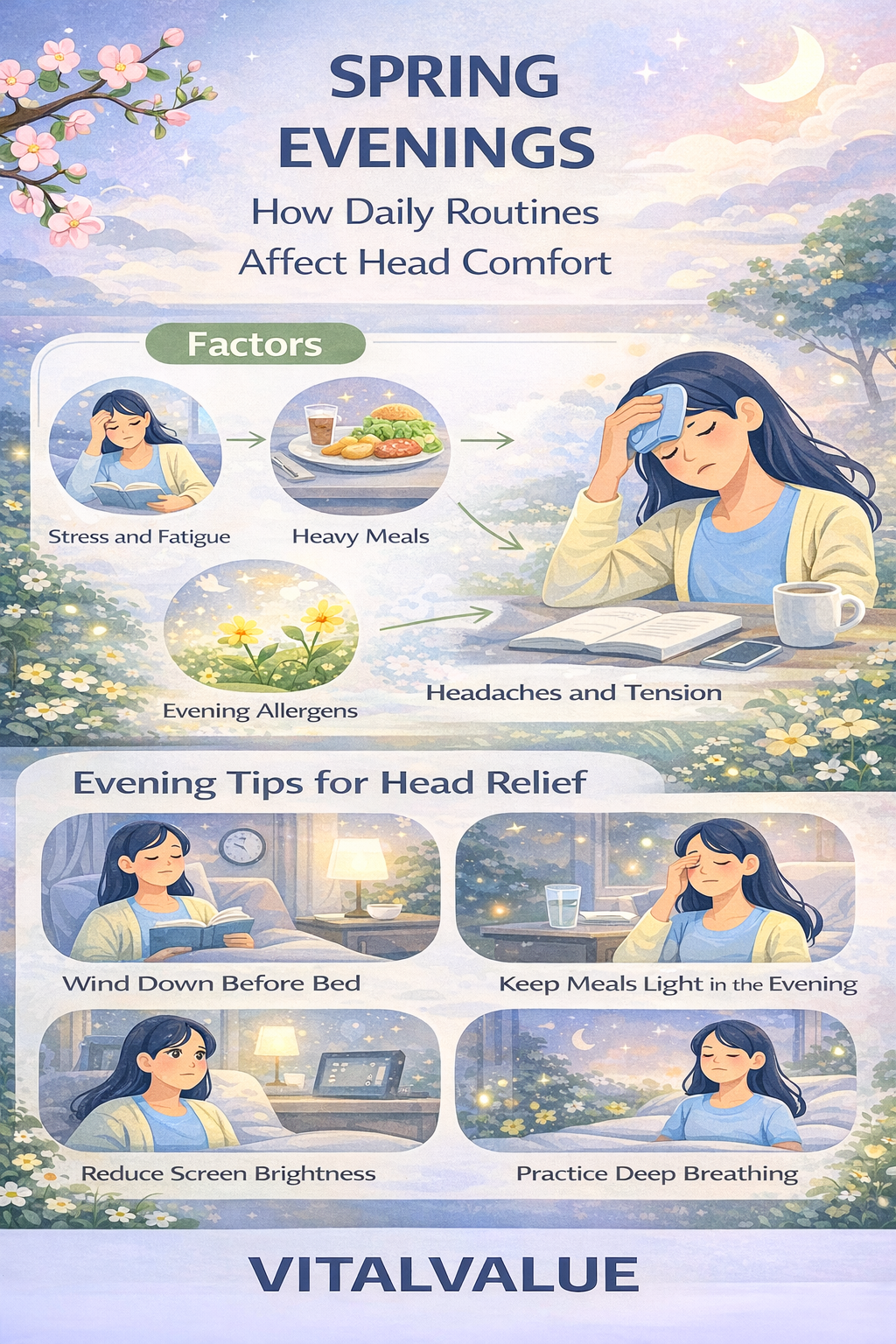
🌱 When the Day Ends With a Slow, Spring Headache
Early spring often ends differently than it begins. The morning may feel clear and energized, yet by evening a gradual headache develops. It can present as dull pressure at the temples, a light band-like tightness across the forehead, or a warm heaviness behind the eyes as daylight fades.
This type of discomfort usually builds quietly. It is not the sharp, throbbing intensity associated with migraine, nor the sudden pain of severe dehydration. Instead, it reflects cumulative strain from environmental shifts throughout the day.
During early spring, several subtle stressors overlap:
• Increased brightness places greater demand on visual focus
• Temperature swings require repeated vascular adjustments
• Wind and airborne particles stimulate sinus pathways
• Lower humidity contributes to mild dehydration
• Longer daylight alters circadian timing
• Sustained sensory stimulation elevates nervous system activity
By evening, the nervous system transitions from stimulation to rest. As muscles relax and circulation shifts, accumulated tension in the scalp, forehead, and upper neck becomes more noticeable. Sinus tissues that reacted mildly to pollen or pressure changes earlier in the day may also contribute to a dull, pressure-like sensation.
Importantly, this seasonal headache often improves with warmth, hydration, gentle stretching, and reduced light exposure. As indoor lighting softens and visual demand decreases, many people notice gradual relief.
Recognizing the pattern allows for supportive adjustments—balanced hydration, periodic breaks from bright screens, posture correction, and exposure to calmer light. With steady routines, spring-related evening headaches typically soften as the body adapts to longer days and shifting air conditions.
🌿 Why Evening Headaches Increase in Early Spring
Evening headaches during early spring rarely stem from a single cause. They tend to build gradually as environmental and physical stressors accumulate from morning through late afternoon. By the time the day slows, the nervous system registers the full load.
Brighter, longer daylight overstimulates the eyes
Spring sunlight is stronger and lasts longer. The eyes adjust continuously to higher contrast and glare, especially during outdoor exposure or screen use. This sustained visual effort can translate into temple pressure or forehead tightness later in the evening.
Temperature swings challenge the body
Cool mornings followed by warm afternoons require repeated vascular adjustments. Blood vessels constrict and expand throughout the day, placing subtle strain on circulation and contributing to tension-type headache patterns.
Wind and pollen irritate the sinuses
Even mild exposure to airborne particles can irritate sinus linings. Low-level inflammation or pressure may not be noticeable initially but often becomes more apparent as the day progresses.
Dry air causes slow dehydration
Spring air can remain dry, especially during windy conditions. Moisture loss through breathing occurs quietly, and mild dehydration frequently manifests as a dull, late-day headache rather than sudden thirst.
Posture changes throughout the day increase tension
Extended sitting, forward head posture, and prolonged screen use tighten the neck and shoulder muscles. This tension radiates upward, creating a band-like or occipital ache by evening.
Air pressure fluctuations intensify sensitivity
Rapid weather changes common in spring influence blood vessel behavior around the head and sinuses. Sensitive individuals may feel this as subtle pressure or heaviness.
Individually, these influences are mild. Together, they compound throughout the day, producing the familiar slow-building early-spring headache that peaks in the evening. With consistent hydration, posture awareness, periodic visual breaks, and reduced irritant exposure, this pattern often becomes less frequent as the season stabilizes.
🍃 How Evening Headaches Feel Throughout the Day
🍃 How Evening Headaches Feel Throughout the Day
Early-spring evening headaches rarely appear suddenly. They tend to build gradually, often beginning as subtle discomfort in the afternoon and becoming more noticeable as daylight fades.
You may notice:
• A dull ache that slowly intensifies after midday
• Warm heaviness behind the eyes
• Pressure across the forehead or temples
• Increased sensitivity to late-day or sunset light
• A band-like tightness around the head
• Neck stiffness that amplifies the discomfort
• Relief after resting, stretching, or drinking warm fluids
This pattern reflects cumulative strain rather than acute pain. Visual fatigue from brighter light, mild sinus pressure from pollen exposure, gradual dehydration, and postural tension all contribute to the sensation.
As the nervous system shifts toward evening rest, muscle tension and vascular adjustments become more apparent.
When circulation improves through gentle movement, hydration, or warmth, the discomfort often softens naturally.
Recognizing this rhythm helps distinguish seasonal evening headaches from more severe patterns and supports thoughtful, preventive care throughout the day.
🌬 How Spring Weather Intensifies Evening Headaches
Early spring brings rapid environmental transitions, and the head often registers these changes by late afternoon or evening.
• Bright sunlight increases visual strain and overstimulates optic pathways
• Wind accelerates sinus dryness and irritates delicate nasal tissues
• Cool morning air encourages temporary blood vessel constriction
• Warm afternoon temperatures expand facial circulation
• Barometric pressure shifts before rain create a heavy sensation
• Persistent dry indoor air contributes to muscle and sinus tension
When humidity rises during rainfall, many people notice relief. Moist air reduces sinus irritation, light intensity softens, and nervous system stimulation decreases.
🧩 Daily Habits That Quietly Worsen Evening Headaches
Environmental factors combine with routine behaviors that increase muscular and neurological strain.
• Extended screen time without visual breaks
• Inadequate hydration throughout the day
• Jaw clenching during concentration or stress
• Working under harsh lighting or direct sunlight
• Ventilating during windy, high-pollen hours
• Bringing pollen-covered clothing into work areas
• Ignoring early neck and shoulder stiffness
• Rubbing irritated eyes repeatedly
Individually, these habits may seem insignificant. Together, they amplify dehydration, muscle tension, sinus sensitivity, and visual fatigue—making the slow-building evening headache more pronounced.
Balanced light exposure, steady hydration, posture correction, and reduced irritant contact often lessen the intensity of spring-related evening discomfort.
🌸 Ten Gentle Ways to Ease Evening Headaches in Early Spring
Evening headaches in early spring usually respond best to tension release, hydration support, and reduced sensory overload. Small adjustments made earlier in the day often prevent the slow buildup that peaks after sunset.
- 🍵 Sip Warm Water or Tea in the Late Afternoon
Warm fluids encourage facial muscle relaxation and improve circulation before discomfort intensifies. - 💧 Maintain Steady Hydration
Consistent fluid intake throughout the day prevents mild dehydration, one of the most common contributors to dull, late-day head pressure. - 🧘 Gently Stretch the Neck and Shoulders
Slow stretching reduces muscle tension that radiates from the upper back into the scalp and temples. - 🌤 Soften Light Exposure
Limit direct sunlight or glare during the afternoon. Balanced lighting reduces eye strain and visual fatigue. - 🚶♀️ Take a Calm Evening Walk
Gentle movement in cooler, calmer air improves circulation and may relieve sinus-related pressure. - 👚 Change Clothes After Outdoor Exposure
Removing pollen and dust from clothing reduces continued sinus irritation indoors. - 🐾 Wipe Pets After Walks
Minimizing allergen transfer lowers inflammatory load that can contribute to head heaviness. - 🌬 Maintain Comfortable Indoor Humidity
Moderate humidity supports sinus comfort and prevents dryness-related tension in facial tissues. - 😌 Release Jaw and Facial Tension
Conscious relaxation of the jaw, temples, and forehead can significantly reduce pressure buildup. - 🛏 Refresh Pillowcases Frequently
Clean bedding decreases overnight irritant exposure, supporting clearer sinuses the following day.
When hydration, posture, light exposure, and airflow are managed consistently, early-spring evening headaches often become milder and less frequent as the season stabilizes.
🌙 Why Headaches Peak at Evening in Early Spring
Evening is often when early-spring headaches feel most noticeable. Throughout the day, the body stays engaged—adjusting to light, temperature, airflow, and posture. When activity slows and stimulation decreases, accumulated strain becomes easier to feel.
By late afternoon or sunset:
• Your eyes have processed hours of brighter, longer daylight
• Blood vessels have adapted repeatedly to temperature swings
• Sinuses have responded to wind, pollen, and shifting air
• Mild dehydration may have developed quietly
• Neck and shoulder tension has built from posture and screen use
• Barometric pressure changes may have influenced vascular tone
During active hours, these adjustments remain in the background. Once the nervous system begins shifting toward rest, muscular tension and vascular sensitivity become more apparent. The headache does not suddenly form—it becomes more noticeable as the body transitions into stillness.
Hydration, warmth, gentle stretching, and softer lighting often reduce discomfort because they directly counteract the day’s cumulative strain.
🌾 Understanding Your Body’s Evening Spring Rhythm
Evening headaches in early spring usually reflect adaptation rather than pathology. The season brings rapid environmental movement—longer light exposure, fluctuating air pressure, changing humidity—and the body responds continuously.
Supportive routines help stabilize this rhythm. Consistent hydration, balanced indoor humidity, posture awareness, reduced glare, and relaxed breathing encourage smoother adjustment.
With steady care and time, the system synchronizes with spring’s pace. As daylight patterns stabilize and environmental shifts feel less abrupt, evening head pressure often softens naturally, allowing the day to end with greater comfort and calm.
'Health' 카테고리의 다른 글
| Nasal Dryness at Night in Spring: Causes and Remedies (0) | 2026.04.02 |
|---|---|
| Why Is My Nose Tingling in Spring? Causes and How to Stop It (0) | 2026.04.01 |
| Afternoon Fatigue in Spring: Causes and How to Boost Energy (0) | 2026.03.30 |
| Dry Cough in Spring: Causes and How to Calm It Naturally (0) | 2026.03.29 |
| Why Do I Feel So Tired in Spring? Causes and How to Regain Energy (0) | 2026.03.28 |


