The day ends, but your thoughts don’t. In learning to set them down, calm returns—and with it, the quiet peace your body has been asking for.
You’ve closed your laptop. The workday’s over — at least, on paper.
But your mind keeps replaying that one unfinished email or meeting.
You lie in bed, exhausted, yet somehow your brain refuses to clock out.
If this sounds familiar, you’re not alone. Many people carry their jobs home in their thoughts — and that invisible weight quietly wears down both body and mind.
✨ If work stress lingers,
reset your thoughts through [Evening Routine for Brain Recovery After Work].
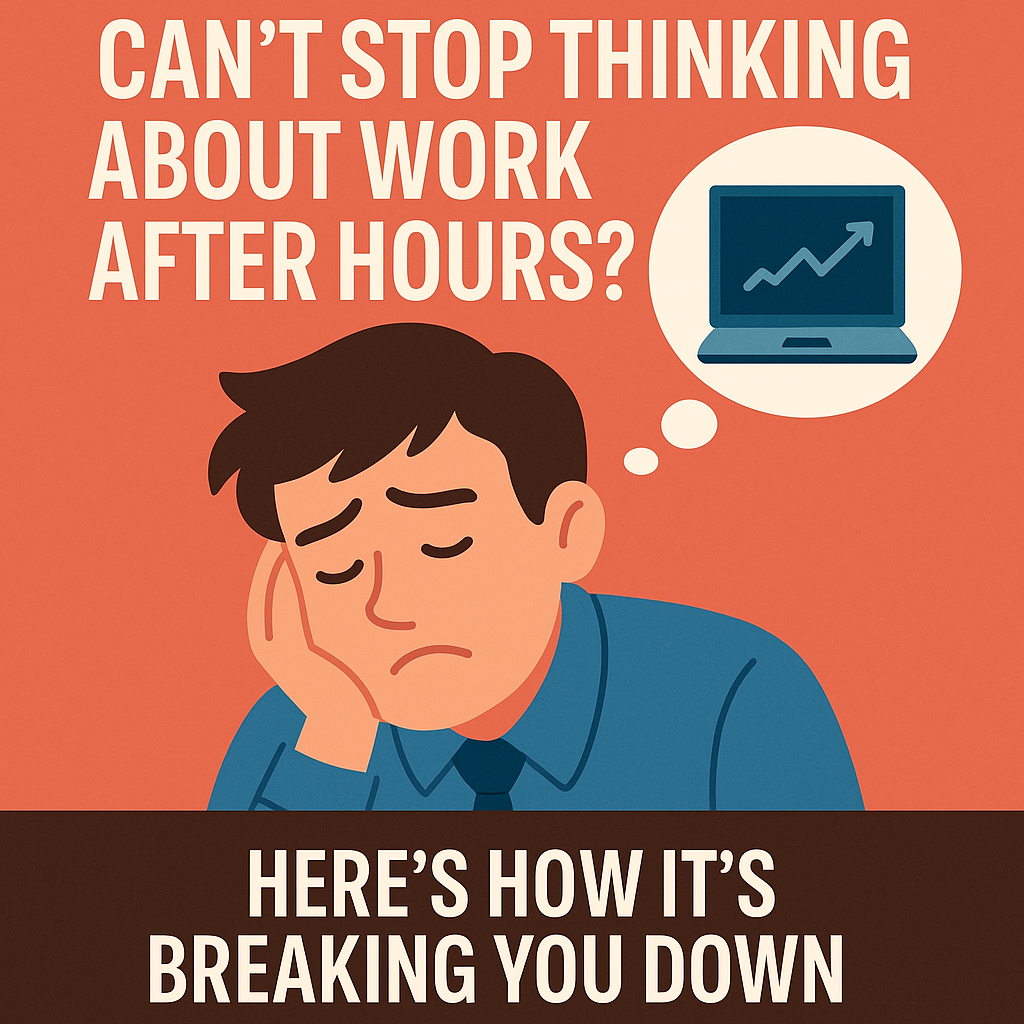
💭 Why You Can’t Switch Off
Modern work doesn’t end at the office anymore. With phones and notifications, your brain rarely gets a signal that it’s safe to rest.
Each new message, even one you don’t open, keeps the stress loop alive — keeping your nervous system slightly alert.
Physiologically, this means cortisol and adrenaline stay elevated long after you’ve logged out.
Your heart rate remains higher than normal, muscles stay subtly tense, and your body never fully transitions into recovery mode.
The result?
- Fatigue that sleep can’t fix
- Irritability and shorter patience
- Reduced focus during real downtime
- Increased risk of burnout, anxiety, and hypertension
It’s not weakness — it’s biology. Your brain simply hasn’t received permission to rest.
⚙️ The Hidden Cost of Constant Mental Work
Work rumination — the habit of replaying or pre-solving work problems after hours — is one of the strongest predictors of burnout.
Even when you’re physically away from work, your mind stays stuck in “problem-solving” mode.
That means your brain is using energy without reward, a bit like running a car engine in park.
Over time, this constant mental engagement:
- Disrupts sleep cycles and REM recovery
- Weakens immune response
- Lowers creativity and emotional balance
- Makes genuine joy or relaxation feel unreachable
It’s why so many people feel “tired but wired” — their bodies want rest, but their minds never stop performing.
🌿 How to Gently Detach From Work
✅ 1. Create a mental “shutdown ritual.”
Before leaving work or logging off, spend 5 minutes writing a short reflection:
What’s done, what’s pending, and what can wait.
Then say to yourself — even quietly — “I’ve done enough for today.”
This small closure helps your brain shift context from doing to being.
✅ 2. Set physical boundaries, not just digital ones.
Avoid checking work messages in the same spot where you relax or sleep.
If possible, place your laptop out of sight after work hours. Out of sight truly helps make it out of mind.
✅ 3. Transition with movement.
Take a brief walk, stretch, or shower right after finishing work. Physical movement signals to the nervous system that the “threat” phase is over and calm can begin.
✅ 4. Practice the “one line rule.”
When your mind brings up a work thought at night, respond gently:
“One line — I’ll handle it tomorrow.”
You acknowledge it without engaging, and that’s enough.
✅ 5. Schedule an intentional unwind window.
Treat rest as part of your routine, not a leftover. A 30-minute “off-duty ritual” — soft lighting, tea, journaling, or calm music — helps your body unlearn constant urgency.
✅ 6. Reconnect with non-work identity.
Ask yourself: Who am I outside my job?
Revisit old hobbies, small creative projects, or simple pleasures like reading or cooking. This mental reset builds emotional distance from professional pressure.
🧘 The Psychology Behind Mental Recovery
Psychologists call it psychological detachment — the ability to mentally switch off from work.
It’s not laziness; it’s a health requirement.
Studies show that people who successfully detach after hours experience:
- Better sleep quality
- Higher positive mood the next morning
- Greater productivity the next day
- Lower risk of emotional exhaustion
Your brain works best when it alternates between focused effort and true recovery. Without that rhythm, even passion turns to depletion.
✨ Separating work and rest protects mental energy —
pair this with [Why You Feel Tired Even After 7 Hours of Sleep].
🌅 Evening Reflection Exercise (5 Minutes)
Before bed, try this brief reset:
1️⃣ Sit quietly. Close your eyes and notice your breathing.
2️⃣ Name three things you completed today. Big or small, they count.
3️⃣ Acknowledge one unfinished task — and visualize setting it down.
4️⃣ End with a calming phrase: “Today is complete. I’ll begin fresh tomorrow.”
It may feel simple, but it creates an internal boundary — a symbolic closing of your workday that your nervous system can trust.
💫 When Work Thoughts Still Sneak In
You can’t control when a thought appears, but you can control what happens next.
Instead of fighting it, label it gently: “Just a work thought.”
Then bring your focus back to your breath, a sound, or the present moment.
You’re not ignoring responsibility — you’re reclaiming peace.
True professionalism includes knowing when to rest.
✨ A Small Reminder
You don’t have to earn rest — you already deserve it.
Your body repairs, your creativity returns, and your spirit resets when you allow silence between your tasks.
So tonight, let work stay where it belongs — in the hours you’ve already given.
And give yourself permission to simply be here, quietly, in the part of life that’s still yours.
Ease into calm nights with
[Light Dinner Ideas for Hot Summer Nights — Easy and Refreshing Meals].


